


According to the Basic Income Earth Network (BIEN), basic income is “a periodic cash payment unconditionally delivered to all on an individual basis, without means-test or work requirement.”1
Universal Basic Income (UBI) is a type of basic income that has three key characteristics:
Universal. Everyone gets it no matter your income, job status, or background.
Regular. Consistent payments provide a predictable income floor.
Unconditional. Spend it how you need. No strings attached.
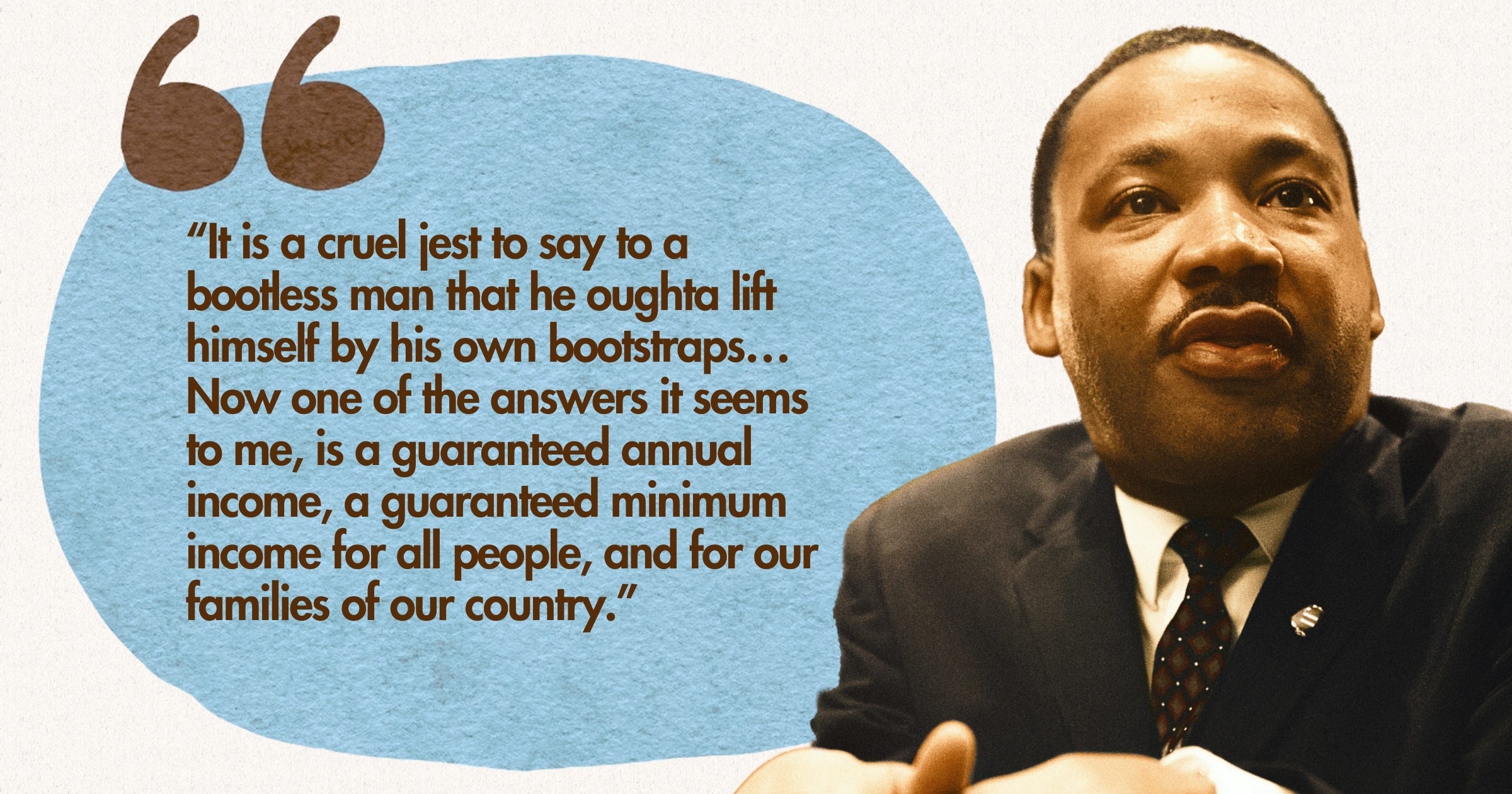
Versions of the concept has garnered support from a wide array of influential figures throughout history such revolutionary thinker Thomas Paine and Dr. Martin Luther King, Jr.2
UBI can offer a financial floor, providing a stable foundation to potentially help individuals and their families.
Common hopes of UBI include:
Gain the freedom to explore career changes or entrepreneurship
Have financial independence
Pursue passions
Improve work-life balance
Increase resilience to challenges
Reduce stress
Helping victims of domestic violence
Supporting unpaid care workers
Fighting technological unemployment
Discouraging low wages
Redistributing wealth
Eliminating the need for social security3
Common concerns of UBI include:
Cost of implementation
Remove the incentive to work
Philosophical counterarguments questioning if money is a birthright4
UBI and Your Life
This concept sparks a lot of debate, but we want to know what you think first.
Behind every statistic and economic concept is a real person hoping for a little ease and a little more breathing room. What would you gain? What would you reclaim?
What is UBI? (Stanford Basic Income Lab)
Should the U.S. Implement a Universal Basic Income? (Britannica)
The Pros and Cons of Universal Basic Income (Penguin Random House)