


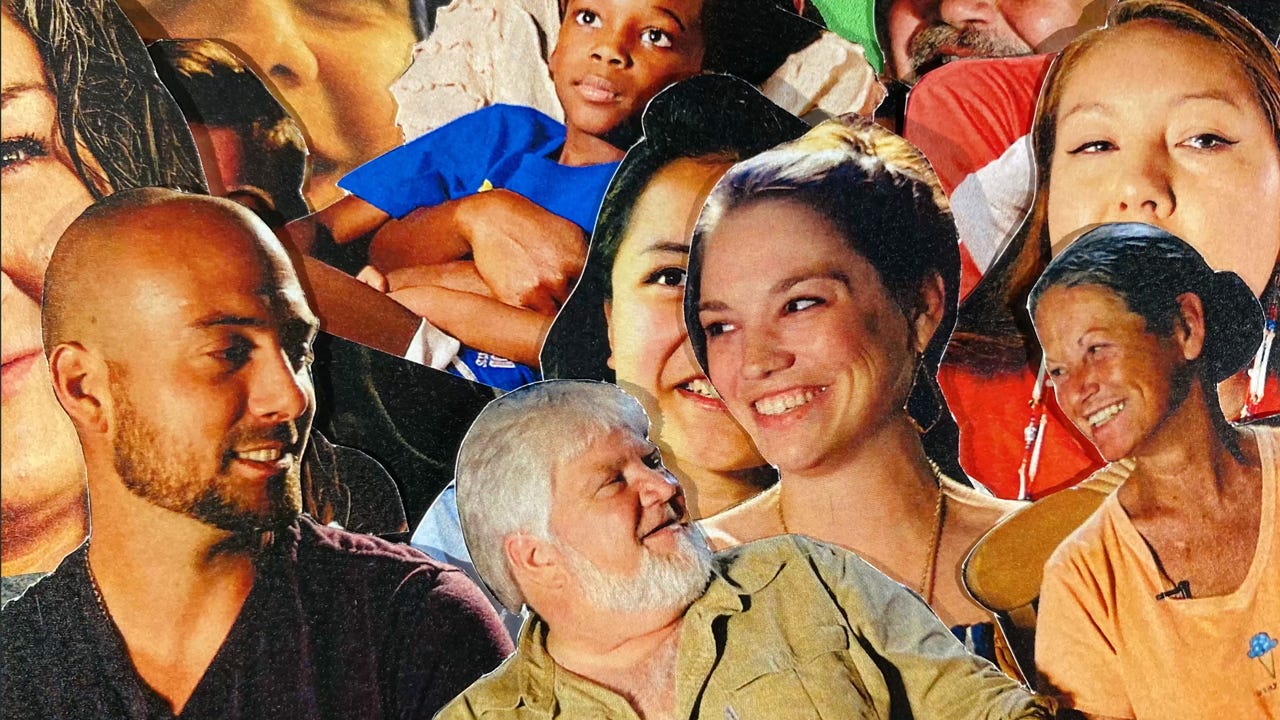
Collaging can get messy.
Though, there can be a beauty in that mess of piecing together materials from different worlds onto a single blank piece of paper. Maybe all the cutouts we scattered on the table are less of a mess and more of a medley (depending on how you want to look at it).
Either way, we tend to have an idea of what we want our collage to look like in the end, but pivoting is inevitable. The accidental rips. The restructuring of the layers. The cutout (that you swore you just had in your hand) suddenly goes missing.
This art form has a long history of experimentation, just like human history itself. As we said before:
“We look back at history as though it were inevitable. But if we paused to really think about it, we realize that people have always been making it up as they go along. And that means it’s not too late to put aside what’s not working to try something different.”
So, why not try it? Open yourself up to the organic and instinctive experience. Be curious. Experiment. Even the 10th century Japanese poets and 19th century hobbyists1 had to do some experimenting before reaching the finalized piece.
Collaging can be a way to express ourselves, to discover ourselves, a way to translate ideas into visual maps, a way for us to simply try something new…
It can be a research method, an archive of your favorite things, a reflection of who we are and who we want to be…
“Collage is about encounters. It is about bringing ideas into conversation with one another… It is multidimensional and interdisciplinary: artistic systems of order.” — Rosa Cran2

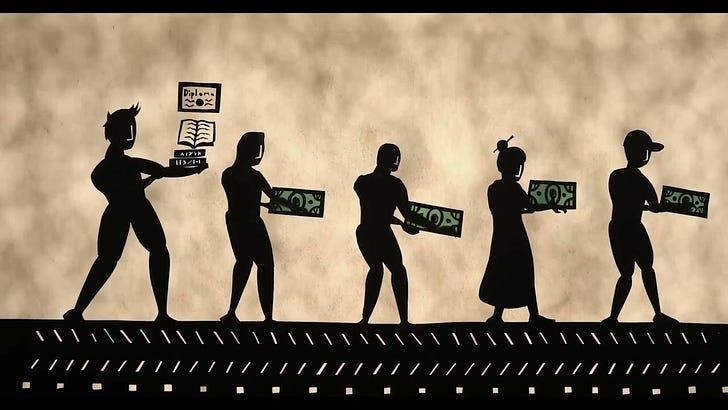
At the sneak peek screenings of Bootstraps in Toronto, Portland, and DC, so many people adored the collage animations that connected each of the 11 Bootstrappers’ stories together. BIG shoutout to our amazing animator, Diego Akel.
Collage has been a central thematic element of Bootstraps, and the best part about collaging is that anyone can try it. No formal training or specific drawing/painting skills required. Sometimes, all it takes is a few scrap pieces of paper to get started.
Basic income works similarly. In the Bootstraps experiment, the funds were the collage materials given to the Bootstrappers, leaving it entirely up to them to decide what to do with it.
Much like piecing together materials from different worlds onto a blank page, the Boots on the Ground Screening Tour is meant to bring people from all walks of life together for community conversations, using the powerful storytelling of the docuseries to introduce UBI in an approachable setting.
(Our First) Collage Workshop
So, we’re experimenting even more by trying out an art workshop format where you can watch a sneak peek of Bootstraps and craft a vision board collage exploring what you would do if you had a basic income.
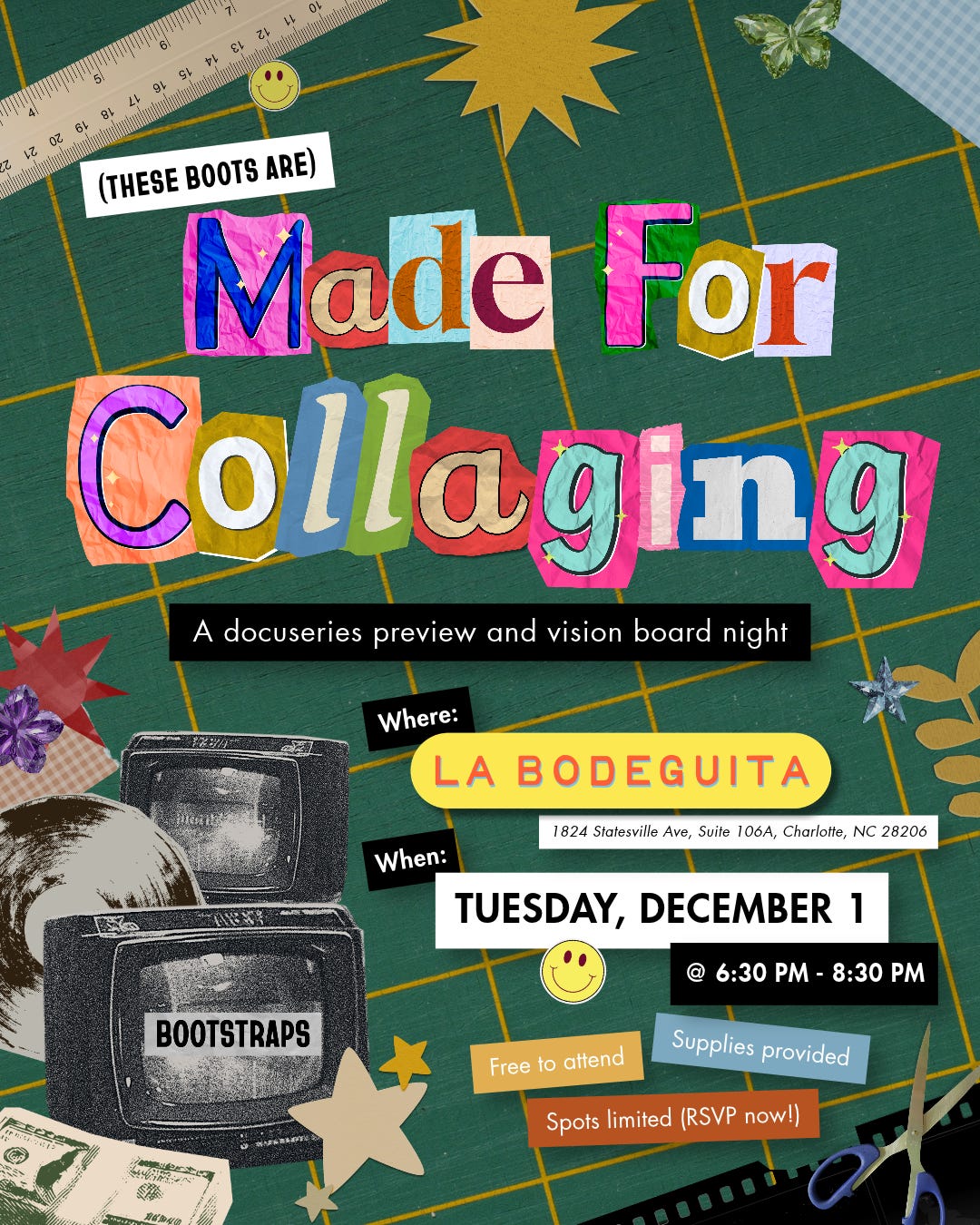
Note: In less than 24 hours of publishing the event page, we reached full capacity. Thank you for the support! A waitlist has been opened, and you’ll be notified if any spots open up.
If you’re not in Charlotte, NC but would love to either host or attend a Bootstraps collage workshop, let us know in the comments or send a request to host a screening in your city.
Leland, Nita; Virginia Lee Williams (September 1994). "One". Creative Collage Techniques. North Light Books. p. 7. ISBN 0-89134-563-9.
Cran R. (2017). Collage in twentieth-century art, literature, and culture: Joseph Cornell, William Burroughs, Frank O’Hara, and Bob Dylan. Routledge.